Showing posts with label intelligence. Show all posts

Thursday, August 25, 2022

A Series of Fortunate Events

Event #1:  1963 - 17-year old brand spanking new high school graduate - straight "A" student in Naivete' 101 (Actual GPA was 2.0 - I didn't deserve it).  Parents signed for me to join Air Force.  While in basic training, was tested and selected for Defense Language School in Monterey.  Filled out forms for security clearance and omitted arrest and conviction at 15 for "driving car without owner's consent."  Shortly after, was sent to technical training to become public health technician instead.  While processing into the school, was handed my records folder to take to another check-in point.  Peeked in folder and noticed they had discovered my omission about getting busted. Yet, they waived a "discharge for fraudulent enlistment." Went on to serve four-year commitment and left service at age 21.  Great adventures and great way to grow up...some.
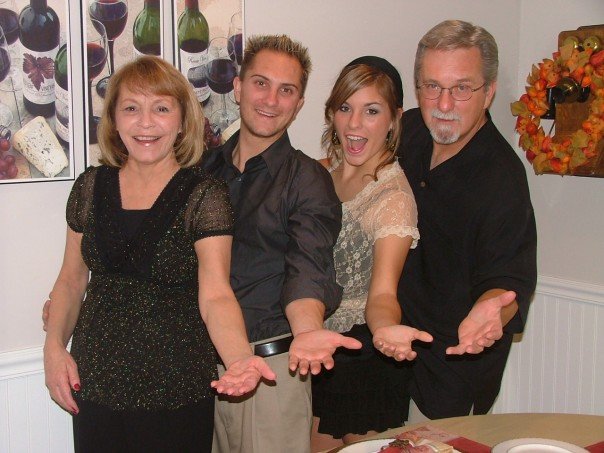
Event #2:  1967 - Back home after first hitch, Seattle seemed too small.  Not happy with work opportunities. After a few months, re-signed with Air Force.  They wanted me to go to Intelligence school so I filled out another security clearance questionnaire and this time, listed my arrest at 15.  It worked. I got a Top Secret SCI clearance and went through Photo Interpreter and Combat Intelligence training at Lowry Air Force base, Denver Colorado.

Event #3:  1969 - Met and married Julieann Marie Thomas to begin 53-year plus relationship.  Be still my heart. Also assigned to Utapao Royal Thai Air Force Base, Thailand where I built strike charts for B-52 bombers.

Event #4:  Promotions were slow (it was probably me) and, after being selected for second tour in Southeast Asia within one year of return to States I was allowed to decline the assignment.  This meant I was ineligible for promotion and was due to be discharged from the service.  Air Force promptly promoted me by accident.  I was set up for nice potential bonus so I asked to withdraw my declination statement and volunteered to return to Southeast Asia.  It worked, I reenlisted and I promptly went back to Thailand (Udorn Royal Thai Air Force Base) where I worked as a photo interpreter picking out targets for air crews. 

Event #5: Passed College Level Entrance Program tests and was almost a sophomore before I took actual college classes (probably learned something from my love of reading...in spite of myself).  Began night classes in Thailand, continued them in next assignment and when I got close enough, I requested full time college under the Air Force's "Bootstrap" program.  Was selected, and we moved from Phoenix to San Bernardino where I completed Chapman College in ten months of night school then back again to Phoenix.  Yes it was fast... three and a half years start to finish. 

Event #6: 1973 - While back in Phoenix after graduation, I found out the Air Force Education folks had failed to have me acknowledge 3:1 payback time for Bootstrap education so I could leave quickly if I wanted. My third (gulp!) hitch, more than half way through a career, was almost up. It would have totaled 12 years; first four goofing around, second four settling down and third four finally getting serious about education. Then I was free to pursue any direction.  

Event #7: I had enjoyed my time in the Air Force so I applied for a commission in the Medical Service Corps. I had decided if that didn't work I would leave and perhaps pursue an MBA.

Event #8: 1975 - While home on leave, an Air force pal tending our Phoenix home called and said I had received a letter from the Medical Service Corps. He asked if I wanted him to open and read it to me. I said "yes" and in front of Julieann, my folks and brother he read the letter notifying me I had been selected. To receive that terrific news in their presence was pretty amazing.

Event #9: While at first assignment, I heard of opportunities to pursue Air Force sponsored Master's Degree in Healthcare Administration.  I asked around and a more senior officer told me; "I applied three times and got selected the third time."  I figured I had better start my three attempts then and applied right away.  My timing was good, I got lucky and was selected...first try.

Event #10: 1979 - Finished Master's program (fortunately) at Medical College of Virginia then assigned to Strategic Air Command's Fairchild hospital in Spokane, Washington.  Son Tyler Thomas was born there... in that same hospital. Julieann followed me to work to have our baby.

Event #11: 1980 - Boss at Fairchild, venerable Colonel Paul McNally had to leave for several months of Air War College and picked me to serve as temporary hospital administrator in his place.  Following visit by Strategic Air Command senior staff, Colonel Gottlieb and company, I was invited to assume Administrator job at northern Michigan hospital.  We had been at Fairchild less than a year.  I asked Julieann what she thought and didn't need a verbal response as I noticed tears in her eyes...not of happiness. I regretfully turned it down.  A few months later, right at our first year anniversary there, I was again offered the Administrator position, this time at the Air Force hospital in Great Falls, Montana. Julieann then held back the tears as I am pretty sure she knew how much I wanted that job. Son Tyler was right at a year old when we left Spokane. Julieann loved Spokane and the home we bought there. It was but one of many hardships she successfully faced during our career of moving really fast from place to place.   

Event #12: 1984 - As I approached the average 3-4 year tenure at Great Falls, Father's health was failing and I applied for a humanitarian assignment to be closer to family in Seattle area.  Found out conditions didn't qualify but MSC assignments officer (thank you Colonel Rutledge) relented and let us go anyway.

Event #13: After a few months in Seattle area and while visiting at parents home, I got a call from my former commander in Great Falls.  He asked if I "was sitting down."  I said "Yes" and he proceeded to tell me I had been promoted to Major three years below the primary zone, an event that occurred for Air Force officers approximately one percent of the time. I was actually nearing 20-year eligibility to leave the Air Force then but could not resist the promotion.  Pretty astonishing event and I would soon find out how huge a part luck had in it.

Event #14: As we approached one year in the Seattle area, I was interviewed for a job assisting with Medical Service Corps assignments and career development.  We moved to San Antonio, moved into a beautiful Spanish-style home on the base and over the next three years I loved working for and with the great Lieutenant Colonel Paul Murrell on career development and assignments for the 1,200 active duty Medical Service Corps officers stationed all over the world.

Event #15: While there I also gained real time experience concerning officer promotion boards. I learned in any single board, there might be a handful of officer records that senior selection committee officers would focus on for potential one, two, or three year early promotion. The few, the small percentage selected would be from that group and the decision was made on all factors available with the exception being the persons being considered were not actually present.  Performance reports (typically "fire walled" and pretty much perfect); education (military and civilian); and increasing job responsibility were key. Also, a current 8x10 photo. I figured officers could position themselves near the very top by focussing on those factors and from that point, it was a coin toss. I knew full well the good fortune involved and soon incorporated that information into career development briefings for fellow Medical Service Corps officers world-wide. Working title; "Aim high and get lucky." 

Event #16: 1987 - Nearing the three year point of that assignment, I started considering next steps. I applied to again be a Hospital Administrator as I loved the work. I was accepted for the position at the Ellsworth Air Force base hospital near Julieann's home town in South Dakota.  I was grateful for that and was once again left with a decision to take that job or retire from the Air Force and explore health care administration positions in the civil sector.  To help us with that, Julieann and I separately listed what we felt were the top ten good things we anticipated from leaving or staying.  Surprisingly, the results were very much the same.  Not long after, I considered that I had spent more than half my life to that point in the Air Force and it was time to find out what civilian life was like. I know I was pushing my luck but "aim high" right? Julieann agreed and we left.

Event #17: 1988 - Daughter Samantha Marie was born about a year after we left the Air Force.  I enjoyed telling folks I misinterpreted the meaning of leaving the Air Force to "start a new life."

Events #18-22:  1988-2023 - I watched my son and daughter grow and prosper for more than 40 and 30 years respectively and they continue to this day. I had another satisfying career as a consultant, most with my own corporation. With Julie's encouragement I bought a Harley Davidson and went through four of them in a 20-year span. I got to love, and learned to play hundreds of Texas Hold'em poker tournaments. I was able to write a couple of books focussing on memoirs of family, motorcycles and life's good fortune. The two are soon to be condensed and edited into one memoir, "Hayseed." 

So there you have it.  I have a wonderful family and I have all these events loaded in my bucket. Of course a lot went on before and hopefully a lot will go on after but this series of fortunate events continues to dazzle me.  As Julieann has often said; I have had a "charmed life" and the most fortunate event of all is that she has been with me, she has encouraged me at every step and she has motivated me to live it.


Friday, September 1, 2017

Air Intelligence Airman Goes to War - sort of

Viet Nam Air Campaigns

Barrel Roll
June-December 1964
In the spring of 1964, Pathet Lao and the North Vietnamese troops drove Laotian forces from the Plain of Jars. On 9 June 1964, President Johnson ordered an F-100 strike against the enemy in retaliation for the loss of a U.S. airplane. These Plain of Jars operations, expanded by December 1964, were named BARREL ROLL and were under the control of the U.S. ambassador to Laos who approved all targets before they were attacked.
(In 1964 I was a medic at my first Air Force assignment at Cannon Air Force Base, New Mexico.  While there I heard Viet Nam was a location of conflict.  Having just turned 18 I was naive and of course, immortal so I volunteered to go.  Not long thereafter I was sent 7,000 miles in the opposite direction...to Lajes Field, the Azores Portugal.  This would not be the first time I would volunteer for a combat zone and the assignment system would deny me...fortunately.)

Arc Light
18 June 1965 - December 1972
(In 1969, I was working in Air Intelligence at U-Tapao Royal Thai Air Force Base Thailand.  I was building high and low level strike charts and drawing radar predictions for B52s - most of the missions were Arc Light)

Arc Light was the name given to the SAC B-52 conventional bombing missions in Southeast Asia during the Vietnam War. The first Arc Light mission was flown 18 June 1965 when Guam-based B-52s were used to attack a Viet Cong jungle stronghold with conventional 750-pound and 1,000-pound bombs. B-52s were used primarily in saturation bombing of Viet Cong base areas, but also were used in direct tactical support of operations such as the Marine Corps’ Operation Harvest Moon and the First Cavalry Division’s fight in the Ia Drang Valley. In 1966, operations were mostly against targets in S. Vietnam, but expanded to include approaches to the Mu Gia Pass in North Vietnam on 12 and 26 April 1966, to interdict the northern Ho Chi Minh Trail. Bombing activity increased tremendously in 1967, almost doubling the number of sorties flown in 1966, supporting ground troops and attacking enemy troop concentrations and supply lines in the A Shau Valley.

The 1968 defense of Khe Sanh was the largest and most significant air campaign to date in Southeast Asia, helping to break the siege on Khe Sanh and force the North Vietnamese to withdraw. In 1969, the B-52 conventional bombing operations in Southeast Asia continued at a steady pace with greater emphasis on harassment and disruption of enemy operations than in previous years, particularly around Saigon. SAC bombers also continued to hit enemy supply dumps, base areas, troop concentrations, and the Ho Chi Minh Trail in Laos. The number of sorties flown in support of Arc Light bombing operations declined from November 1969 until ceasing temporarily in August 1970.

Guam-based B-52s resumed flying in February 1972, in a surge of Arc Light activity named Bullet Shot, reaching a peak by mid-1972 exceeding all previous records of Arc Light performance as the U.S. pushed the Communist forces hard to force peace negotiations. After the Paris Peace Accords ended U.S. involvement in Vietnam in January 1973, Arc Light operations continued in Laos and Cambodia, until the end of U.S. combat operations on 15 August 1973.

The Arc Light Memorial at Andersen Air Force Base, Guam, is dedicated to the 75 men who lost their lives flying Arc Light B-52 missions.

Iron Hand
1966-1972
North Vietnam’s air defense system was an integrated combination of AAA, SA-2 SAMs, and MiG aircraft, considered at the time to be the world’s most formidable air defense environment. The tactics employed on the Iron Hand missions were primarily designed to suppress the SA-2 and gun-laying radar defenses of North Vietnam during the ingress, attack and egress of the main strike force. An Iron Hand flight consisted of one F-100 or, later, F-105 Wild Weasel to seek out SAM radar emissions and three other F-105s carrying bombs or rockets to attack the site. Iron Hand operations reduced SAM accuracy, but did not succeed in stopping the barrage firing. Radar bombing of SAM sites was also ineffective.

Rolling Thunder
24 February 1965 - October 1968
USAF and Navy aircraft engaged in the Rolling Thunder bombing campaign designed to force Ho Chi Minh to abandon his ambition to take over South Vietnam. The operation began primarily as a diplomatic signal to impress Hanoi with America’s determination, essentially a warning that the violence would escalate until Ho Chi Minh "blinked," and secondly it was intended to bolster the sagging morale of the South Vietnamese.
The Johnson administration also imposed strict limits on the targets that could be attacked, for China and the Soviet Union were seen as defenders of communism who might intervene if the North Vietnamese faced defeat. Consequently, the administration tried to punish the North without provoking the two nations believed to be its protectors. In the view of the Air Force leadership, the campaign had no clear-cut objective nor did its authors have any real estimate of the cost of lives and aircraft. General LeMay and others argued that military targets, rather than the enemy’s resolve, should be attacked and that the blows should be rapid and sharp, with the impact felt immediately on the battlefield as well as by the political leadership in Hanoi.

When Rolling Thunder failed to weaken the enemy’s will after the first several weeks, the purpose of the campaign began to change. By the end of 1965, the Johnson administration still used air power as an attempt to change North Vietnamese policy, but bombing tended to be directed against the flow of men and supplies from the North, thus damaging the enemy militarily while warning him of the danger of greater destruction if he maintained the present aggressive course.

To persuade the North Vietnamese to negotiate, President Johnson restricted the bombing of North Vietnam to the southern part of the country on 31 March 1968, in effect, bringing Operation Rolling Thunder to an end. Preliminary discussions began in Paris in May but bogged down over trivial issues. In November, Johnson made another concession, ending the bombing throughout the north, and serious negotiations began in January 1969.
Mu Gia Pass on the Ho Chi Minh Trail

Commando Hunt
1968 - 1972
(In 1972, I was still in Intelligence, working as a photo Interpreter at Udorn, Thailand.  Most of the film we looked at was from F4 Reconnaissance aircraft.  We were doing bomb damage reports, much of it on the Ho Chi Minh Trail and hunting targets including AAA and SAM sites, trucks, tanks, people and even cattle. Commando Hunt bombing missions made Mu Gia Pass on the trail look like craters on the moon but the North Vietnamese just kept driving around them.)

USAF carried out the Commando Hunt series of aerial interdiction campaigns against the Ho Chi Minh Trail in southern Laos, trying, in conjunction with ground actions, to use air power and electronics to impede the movement of soldiers and supplies from North Vietnam to the battlefields of South Vietnam. There were seven successive Commando Hunt operations, beginning in the fall of 1968 and lasting until the spring of 1972, when the North Vietnamese Easter Offensive invasion of South Vietnam changed the nature of the war.

Menu
18 March 1969 - 26 May 1970
(Worked on these in Utapao, Thailand.  We would “plot” the targets exactly at the Cambodian border but we knew the crews were being secretly ordered to continue on the same axis into Cambodia before dropping their bombs.) 

"Menu" was directed at Cambodian base areas and logistics networks supporting Communist operations in South Vietnam. Pres. Nixon ordered these raids to punish Hanoi for their continued fomenting of fighting in S. Vietnam while they simultaneously avoided serious peace negotiations and to gain time for Vietnamization to prepare S. Vietnam's forces. Anti-war protests in the U.S. limited Pres. Nixon's options since further bombing of North Vietnam would be politically unacceptable, so the Cambodian sanctuaries were targeted.

During the Menu series of raids, B-52s flew 3,630 sorties and dropped 100,000 tons of bombs. Individual missions in the Menu series were named Breakfast, Supper, Lunch, Dessert, and Snack, thus the name Menu bombing. Menu raids continued until 26 May 1970, when the bombing campaign was exposed by the New York Times after the start of the Cambodian Incursion by ground troops.

While the Arc Light raids were open and authorized through channels, Menu missions were not. The classified missions were directed by the White House and personnel involved had to deceive USAF officials and falsify official records. Knowledge of the operations was highly compartmentalized; even the Air Force Chief of Staff and the SEC-AF were not informed. Arc Light raids were used to cover the Menu raids. Formations were sent together, sometimes in the same groups, sometimes at the same time. While Arc Light groups hit southern targets, Menu groups crossed the border into Cambodian air-space. Menu pilots later falsified reports, stating they had bombed South Vietnam.

Linebacker
6 April - 23 October 1972
(We worked on targeting and bomb damage assessment for these out of Udorn, Thailand)

The aerial interdiction campaign against North Vietnam's Easter Offensive began on 6 April 1972 with attacks in the southern part of the country, then expanded rapidly. On 16 April, B-52s, escorted by fighter and aircraft specializing in electronic countermeasures and suppression of surface-to-air missiles, bombed the fuel storage tanks at Haiphong, setting fires that, reflected from cloud and smoke, were visible from 110 miles away. Shortly afterward, carrier aircraft joined Air Force fighter-bombers in battering a tank farm and a warehouse complex on the outskirts of Hanoi. When these attacks failed to slow the offensive, naval aircraft began mining the harbors on 8 May, and two days later the administration extended the aerial interdiction campaign, formerly known as Freedom Train but now designated Linebacker, throughout all of North Vietnam. When Linebacker drove the N. Vietnamese back to the peace talks in October, the bombing was halted. After several months, the N. Vietnamese again left the peace talks.


Linebacker II 
(18-29 December 1972
This was the last campaign I was involved in…headed home in the middle of it. I was again pinpointing targets and doing bomb damage assessments. Our pilots hit hard anti-aircraft emplacements, surface to air missile sites and bridges with precision. A US magazine cover photo of a Hanoi AAA site manned by a young Vietnamese woman remains stuck in my memory.)


The primary objective of Linebacker II was to once again coerce North Vietnam to re-enter into the peace negotiations to end the war in Vietnam. The operation employed almost unrestricted strategic and tactical air power, night and day, against major strategic targets in the Hanoi and Haiphong areas. In the eleven days of the campaign, U.S. planes dropped over 49,000 tons of bombs, devastating North Vietnam. They returned to the talks at the end of December and the Peace Agreement was signed in January 1973, bringing U.S. involvement in the Vietnam War to a close.

Saturday, January 29, 2011

Someone To Watch Over Me

He sensed adventure...but somehow overlooked danger

Air Force Intelligence Badge
It was the mid-60's
He was attending Air Force Intelligence School
Lowry Air Force Base, Colorado
Sandwiched between Denver and Aurora

Lowry would later be noteworthy (at least in his mind)
For its close proximity to the bars of Colfax Ave
And the famous( ?) "Zanzabar" nightclub
Of Clint Eastwood's 1978 movie,
"Every Which Way But Loose" fame

Note: But Colfax Avenue and the Zanzabar... is another story with a little more detail (click here) Ben and Jack
Another note: the old Zbar location is now a Walgreen's
The "Starbucks" of drugstores... wouldn't you know?!

At Lowry, he was studying two separate but related Intelligence technician skills.

The first; air (current) intelligence was somewhat like gathering tidbits of news from different government spy agencies and passing relevant parts to air crews... keeping them up on the latest. Analysts were also responsible for tasks like building strike charts (maps) for aircrews to use on bombing missions, drawing radar predictions and teaching them fighter aircraft recognition... "This here's a photo of a Russian MIG. You either want to shoot them down, observe them or stay away from them...depending."

The second skill was photo interpretation. This involved using the techniques of photogrammetry to analyze (mostly) aerial photography and identify bombing targets. When finished, he could be assigned to jobs in either skill. Either way, it was all interesting so he was enjoying school - a rare experience for him in his young life.

One day, in class there was an announcement. "We are looking for volunteers for training as Air Intelligence Airman Parachutists." Since he was 21 at the time and feeling the same sense of immortality that infects most folks of that age he quickly volunteered.

First, there was physical conditioning testing at the base gymnasium. He was asked to do rope climbs to the rafters, push-ups, sit-ups and other tests of strength. He handily passed all. Next step was a physical exam and that is where he had trouble. His eyesight was 20/200 correctable to 20/20 and that was "outside the acceptable limits" for parachute training. He wasn't too happy about that, particularly since he played wide receiver in a lot of sandlot tackle football and had majored in billiards in high school... all without glasses (he was pretty content, and successful at playing the blurs).

Anyway that was that.

Shortly thereafter, he learned most of those accepted for training ended up in Viet Nam and South America, participating in and teaching counterinsurgency... at that time a job with an extremely high fatality rate.

Right there and then someone was watching over him. You know who.

(For more detail on Intelligence activities following this adventure click here: Randal C - You've Been Found!)